Source workwear canvas jacket for Factory, Hospital, and Auto
Find 30 verified workwear canvas jacket options tailored for industrial and maintenance needs. Buyers can compare features like breathability, winter protection, and custom sizing from suppliers in Jiangxi, China.
Key considerations
Products List

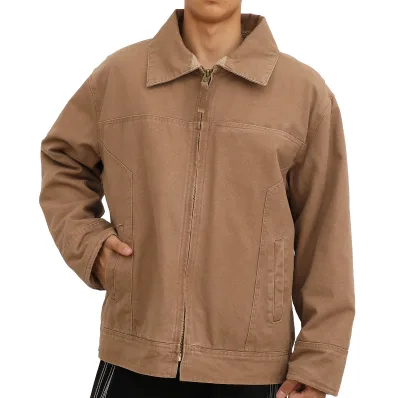


$19.00 - $19.90
Moq: 1000




Comprehensive Sourcing Guide
Strategic Sourcing Guide for Workwear Canvas Jackets
Understanding Product Definitions and Core Attributes
When initiating a procurement strategy for workwear canvas jackets, the first step is to rigorously define the product scope based on observable market data. The term "workwear canvas" typically refers to durable fabrics designed for industrial and commercial environments, often characterized by a specific weight and weave structure. In the current market, a prominent variation of this product is the winter canvas jacket, which integrates specific functional requirements for cold-weather protection. The observed product attributes indicate a primary material composition of 100% cotton, which is a critical differentiator from synthetic blends often used in general apparel. This natural fiber choice suggests a focus on breathability and comfort, essential for workers engaged in prolonged physical activity.
The structural integrity of these garments is often defined by their weight and yarn count. Market observations highlight a fabric weight of 220g, which provides a substantial barrier against wind and cold without being excessively heavy. The yarn count is frequently cited as 21*21, a specification that influences the density and durability of the weave. This combination of 100% cotton material and 220g weight creates a fabric that is robust yet retains the natural breathability associated with cotton. Furthermore, the product structure is described as "All-in-one" in certain configurations, suggesting a seamless design that may reduce potential points of failure or discomfort. The availability of custom colors, including gray, brown, dark gray, and black, allows for brand alignment or safety color coding within specific industries.
Technical Specifications and Material Composition
A detailed analysis of technical specifications is essential for ensuring the purchased goods meet operational needs. The width of the fabric is a standard specification observed at 57/58 inches, which dictates the cutting efficiency and pattern layout for manufacturers. For buyers evaluating the garment's construction, the presence of needle detection is a significant technical feature. This indicates that the manufacturing process includes metal detection protocols to ensure no sharp metal fragments remain in the final product, a crucial safety feature for food processing, pharmaceutical, or general assembly line environments.
The product model numbers observed in the market, such as THR-03007 and SP6-230406, serve as unique identifiers for specific configurations. These models often correlate with specific functional attributes like "Wash and Wear" capabilities and "Security" features. The "Wash and Wear" attribute implies that the fabric has been treated or woven to resist wrinkling and maintain shape after laundering, reducing maintenance costs for the end-user. Additionally, the "Anti-Wrinkle" feature is explicitly listed, reinforcing the garment's suitability for professional environments where a neat appearance is required. The absence of seamless fusing in some models suggests a traditional construction method that may offer greater durability in high-stress areas compared to fused alternatives.
The packaging specifications also play a role in logistics planning. Products are often shipped in rolls with polybag and non-woven bag protection, or in boxes depending on the specific model. The single package size of 60x40x2 cm and a gross weight of 0.900 kg provide concrete data for calculating freight costs and warehouse storage requirements. Buyers must verify if the "All-in-one" structure applies to the specific jacket model they are sourcing, as this affects the assembly process and the final product's fit.
Compliance, Certification, and Safety Standards
In the realm of industrial procurement, compliance is not merely a formality but a prerequisite for market access and worker safety. The supply chain for workwear canvas jackets must be scrutinized against recognized international standards. One of the most critical certifications observed in this sector is the Oeko-Tex Standard 100. This certification verifies that the textile product is free from harmful substances, ensuring the safety of the wearer against skin irritation and chemical exposure. For buyers sourcing from China, particularly from regions like Jiangxi, obtaining proof of Oeko-Tex certification is a vital step in the vetting process.
Beyond material safety, specific industry applications may require adherence to protective clothing standards. The data indicates compliance with EN11611 and EN11612. EN11611 relates to protective clothing for use in welding and allied processes, protecting against heat and small splashes, while EN11612 covers protection against liquid chemical splash. The presence of these certifications suggests that the canvas jackets are suitable for high-risk environments such as manufacturing plants, welding shops, and chemical handling areas. However, buyers must verify that the specific model number they are ordering carries these certifications, as compliance can vary between product lines even within the same supplier.
It is important to note that while ISO 20471 is a relevant standard for high-visibility clothing, it appears in the background context with lower confidence. Therefore, buyers should not assume that all workwear canvas jackets meet this standard without explicit verification from the supplier. The procurement strategy should prioritize requesting valid, up-to-date test reports for EN11611 and EN11612, as well as the Oeko-Tex certificate, before placing any order. This due diligence ensures that the purchased garments provide the intended level of protection and meet regulatory requirements in the buyer's jurisdiction.
Cost Drivers and Procurement Economics
The economics of sourcing workwear canvas jackets are influenced by several variable factors, including material costs, customization levels, and order volume. The observed price range in the market spans from 3.55 to 38.95 USD, a wide disparity that reflects differences in quality, certification status, and order quantity. The lower end of this range likely corresponds to standard, non-certified items or smaller order volumes, while the higher end may reflect premium materials, extensive customization, or compliance with rigorous safety standards.
The Minimum Order Quantity (MOQ) is a significant cost driver. The observed MOQ range varies from 100 to 3000 pieces, with a specific high-confidence observation of 1000 pieces for certain models. Buyers with smaller inventory needs may face challenges in sourcing cost-effective quantities, potentially leading to higher per-unit costs. Conversely, larger orders can leverage economies of scale to reduce the unit price. The supply type is listed as "Oem Service," indicating that most suppliers are willing to customize the product, which can add to the cost but also allows for brand differentiation.
Payment terms are another critical economic factor. The standard payment structure observed is a 30% deposit via T/T (Telegraphic Transfer), with the balance typically due upon shipment. This arrangement is common in international trade but requires buyers to manage cash flow effectively. Additionally, the availability of sample orders with a 7-day lead time allows buyers to test product quality before committing to large volumes, mitigating the risk of financial loss due to defective batches. However, sample costs and shipping fees should be factored into the total cost of ownership.
Typical Applications and Functional Performance
The versatility of workwear canvas jackets is evident in their diverse range of applications. The product attributes list usage in sectors such as Shoes, Security, Industry, Hospital, Home Textile, Garment, Bags, Auto, and Agriculture. This broad applicability suggests that the canvas jacket is a foundational garment suitable for various work environments. In the automotive and manufacturing sectors, the "Winter Protection" and "Windproof" features are particularly valuable, ensuring worker comfort and productivity in cold or drafty conditions.
The "Breathable" and "Warmful" attributes indicate a balance between thermal insulation and air circulation. This is crucial for workers who may experience fluctuating activity levels, such as maintenance men or factory workers. The "Anti-Wrinkle" feature makes these jackets suitable for roles that require a professional appearance, such as security personnel or customer-facing maintenance staff. The "Unisex" and "Adult" designations ensure that the garments can be sized to fit a diverse workforce, simplifying inventory management for large organizations.
Specific workplace environments, such as factories, benefit from the "Needle detection" feature, which prevents contamination in sensitive areas. The "Label" accessory allows for easy identification of the wearer's department or role, enhancing organizational efficiency. The "Work Fashion" classification suggests that these garments are designed to be functional while maintaining a modern aesthetic, which can improve employee morale and brand image.
Supplier Evaluation and Quality Control Protocols
Evaluating suppliers for workwear canvas jackets requires a multi-faceted approach that goes beyond price comparison. Buyers should prioritize suppliers who demonstrate transparency in their manufacturing processes and provide verifiable documentation for certifications. The "Oem Service" and "ODM Custom" capabilities indicate that suppliers are flexible, but buyers must assess their capacity to maintain quality during customization. The "Needle detection" feature is a strong indicator of a supplier's commitment to safety and quality control, as it requires specialized equipment and rigorous process management.
Quality control should be integrated into the procurement lifecycle. Buyers should request pre-production samples to verify the "220g" weight and "21*21" yarn count specifications. Post-production inspections should focus on the integrity of the seams, the accuracy of the color matching (Gray, Brown, Dark Gray, Black), and the functionality of the "Wash and Wear" properties. The "Single package size" and "Single gross weight" data provided by suppliers should be cross-referenced with actual shipments to ensure consistency in logistics planning.
Furthermore, the "Place of Origin" being Jiangxi, China, is a known manufacturing hub for textiles. Buyers should verify the specific factory location and capacity to ensure they are dealing with a legitimate manufacturer rather than a trading company. The ability to provide "En11611" and "11612" test reports is a non-negotiable requirement for buyers in regulated industries. Establishing a clear communication channel for addressing quality issues and returns is also essential for long-term success.
Long-Term Procurement and Supply Chain Resilience
Sourcing workwear canvas jackets is not a one-time transaction but part of a long-term supply chain strategy. The "Supply Type" being "Oem Service" implies a partnership model where the supplier adapts to the buyer's evolving needs. Buyers should consider the scalability of the supplier's production capacity to handle fluctuations in demand. The "7 days sample order lead time" is a positive indicator of responsiveness, but the lead time for bulk orders must be confirmed to ensure timely delivery.
Sustainability is an emerging consideration in procurement. The "Eco-Friendly" attribute suggests that some suppliers are adopting greener practices. Buyers should inquire about the environmental impact of the cotton sourcing and the dyeing processes used. The "Oeko-Tex Standard 100" certification is a strong starting point for verifying the environmental and health safety of the product.
Finally, the "Customised" size option allows for a better fit, which can reduce returns and improve worker satisfaction. However, this customization requires precise size charts and clear communication. Buyers should establish a standardized sizing protocol with their supplier to minimize errors. By focusing on technical specifications, compliance, and supplier reliability, buyers can build a resilient supply chain for workwear canvas jackets that meets the demanding requirements of modern industrial environments.
FAQs
What certifications do these workwear canvas jackets have?
The jackets hold Oeko-Tex Standard 100 certification for safety and EN11611 and EN11612 for protective use. These standards verify the absence of harmful substances and provide protection against heat and chemical splashes in industrial environments.
How is the material composition defined for this canvas jacket?
The product is made from 100% cotton with a yarn count of 21*21 and a weight of 220g. This natural fiber composition ensures breathability while providing the durability required for winter protection and industrial work settings.
Can I customize the color and size of the jacket?
Yes, colors are available by customer request including gray, brown, and black, and sizes are fully customized. The supplier offers OEM and ODM services to meet specific branding and sizing requirements for your workforce.
What is the minimum order quantity for these jackets?
The minimum order quantity ranges from 100 to 3000 pieces depending on the specific model and customization needs. A high-confidence observation indicates a standard MOQ of 1000 pieces for certain configurations of this workwear canvas jacket.
Does the jacket include safety features like needle detection?
Yes, the manufacturing process includes needle detection to ensure no metal fragments remain in the final garment. This feature is critical for safety in environments like food processing or assembly lines where metal contamination must be prevented.
What is the lead time for sample orders?
Sample orders are supported with a lead time of 7 days for production. This allows buyers to verify the quality, weight, and wash-and-wear properties before committing to larger bulk orders.